Published
Comments None
Categories |

This week, a look at some shitty robots, a new format for storing data for a long time, but first, what you can do with all of those photos on your computer.

Print your photo products locally with London Drugs

With digital cameras everywhere, in the form of DSLRs and mobile phones, we’ve all got big archives of photos on our computers. And sometimes we like to do crazy things with them, like make prints.

It’s not like there are photo shops on every corner like there used to be, though. So if we want to get some 4×6s of that family reunion, most of us are using an online service. Which is actually really simple to do.

And digital photography and innovations in printing digital images means that we can do much more than just get some snapshots. We can print greeting cards and posters. We can put our images on t-shirts and coffee mugs and fridge magnets.

A couple of weeks ago, the coaches of my daughter’s soccer team decided that they wanted to give the players a memento of their four years together in the form of a photo book.

That’s easy to do, too. But while many of us may think to create a project like this with Apple or Shutterfly, you may not realize that you can do it right here in Vancouver. Well, Richmond.

London Drugs has always had a fantastic photo department, and while there’s not a lot of film being processed anymore, the company’s Photolab has completely kept pace with technology.

And anything you can print at an online service you can print at London Drugs. Like mugs and mousepads and ornaments.

Including books. And London Drugs pricing was, depending on the product, on par or cheaper than what was available anywhere else.

So last week, I took about 70 photos that parents had taken of the soccer team in the past four years, and I used London Drugs’ online system to create a 20-page softcover photo book. It was so easy to do, too. I uploaded the images to the server, then was able to simply drag and drop images into the framework of the book that I chose (from a whole list of templates).

I was able to zoom and crop and make tweaks to the images, and it only took me an evening to put it all together. Then I set a quantity, pressed a button, and the print job was sent to the London Drugs print centre in Richmond. They were ready seven days later, and I was able to pick them up at my local store. No shipping cost.

Yes, you can print these products elsewhere. But if you can produce them locally, in a week, and avoid any shipping and border costs, why would you?

Store your data for ever and ever and ever

Want to keep those vacation photos forever?

Scientists have come up with a way to store 360 terabytes of data for up to 13.8 billion years. That’s about how old the universe is.

The nanostructured glass disc made of fused quartz encodes information in five dimensions: size, orientation, and the three standard coordinate dimensions (x, y, z).

DNA can store more data than the new 5-D glass discs (Quartz suggests that all of the data on Earth could fit onto a teaspoon’s worth of DNA), but DNA isn’t nearly as robust as the new discs.

The problem with storing data, though, may end up having less to do with what we store things on, and more to do with making sure that future hardware is backwards compatible.

Anybody still have a computer that can read 5 1/4 floppy discs?

The lighter side of robots

Last week we were afraid of robots. Now I’m laughing at them again thanks to Simone Giertz, a Swedish programmer, maker, and inventor who creates – her words – shitty robots.

And then she regales the Internet with videos of her creations. Among them, an applause machine, a wake-up machine, a breakfast machine, and a lipstick robot.

Published
Comments None
Categories |

This week, the flexible screen being tested on mobile handsets at Queens University, how LG is trying to make its mobile phone stand out from the crowd, and the amazing adaptability of Boston Dynamics’ Atlas robot.

Canadian researchers show off bendy mobile screen

The Human Media Lab at Queens University is a cool place where researchers play with technology and media and the intersections between them.

Last month, they showed off ReFlex, a flexible smartphone that can be interacted with by bending it. So if you’re reading a book on the handset, for example, you can bend it to “flip” the pages.

The smartphone uses an organic light-emitting display (OLED) with sensors behind the screen that can detect the force someone used to bend it.

Roel Vertegaal, who directs the Lab, said that flexible mobile devices could be on the market in five years.

LG does something different with a mobile phone

The Android-based G5 smartphone from LG was revealed a couple of weeks ago at the annual Mobile World Congress tradeshow. And for the first time in years, there is something different that isn’t simply an upgraded processor or a more powerful camera. The G5 brings two new concepts to its handset: modular design and peripherals.

Two modular components were introduced in Barcelona. Both can easily be snapped in to the G5 case.

  • The LG Gam Plus is a camera grip with a shutter button, zoom dial, and additional battery capacity
  • The LG Hi-Fi Plus is an amplifier and digital audio converter designed in collaboration with Bang & Olufsen that will upsample any audio on the phone

The G5 was also designed to work with a whole range of peripherals the company is calling “Friends” that will be plug-and-play with the handset.

  • The LG 360 Cam is a spherical camera that can record high-definition video
  • The LG 360 VR headset is a lightweight virtual reality display that tethers to the G5 with a USB-C cable and can be folded when not in use
  • The LG Rolling Bot is a mobile camera, shooting video and taking still photos while being controlled by the G5

Robots have come a long way, man

Less than a year ago I was laughing at the robot fails that occurred at the DARPA Robotics Challenge robotics challenge fails finals. I’m not laughing any longer.

Atlas, a project at Boston Dynamics, is physically adaptable in ways that wasn’t even possible a year ago.

And as everyone commented on social media last week, the guy with the hockey stick is going to be the first victim when the overlords ultimately reveal themselves.

Published
Comments None
Categories |

This week, a solution for jet lag, the Tesla for the rest of us gets closer, and an amazing prosthetic limb is unveiled.

How to deal with jet lag: Flashing lights?

New research out of Stanford suggests that a few flashing lights can help you deal with jet lag the next time you’re visiting another continent.

Turns out that by exposing people to a two-millisecond flash of light every 10 seconds in the early morning part of sleep right before a trip across time zones was able to mitigate their experience of jet lag.

Researchers suspect it works because the brain and body are fooled into thinking that it was actually in a different time zone to start. They are developing a sleep mask that could be operated through your mobile so we can all have the solution at our fingertips.

Tesla will start taking deposits for the Model 3

A couple of weeks ago, Elon Musk got everybody talking about Tesla again with a tweet that reservations for the Model 3 midsize vehicle will start next week, on March 31.

The deposit is only US$1,000, and in a reply to a reply, Musk confirmed that the final purchase price is expected to be about $35,000.

This will be the third Tesla in the fleet, including the Model S (released in 2012) and the Model X (which started shipping to customers last fall).

Last year, Tesla sold 25,202 Model S sedans. Compare that to some 9 million Toyotas that were sold, and you’ll understand why some investors and analysts are a bit worried about Tesla’s ability to keep up with demand.

The Model 3 will be as cheap as $25,000 in some places in the U.S. where government incentives for electric vehicles add up to about ten grand.

Can Tesla manufacture as many cars as there are going to be people wanting them? I guess we’ll see.

Video-game inspired prosthetic arm unveiled in Austin, Texas

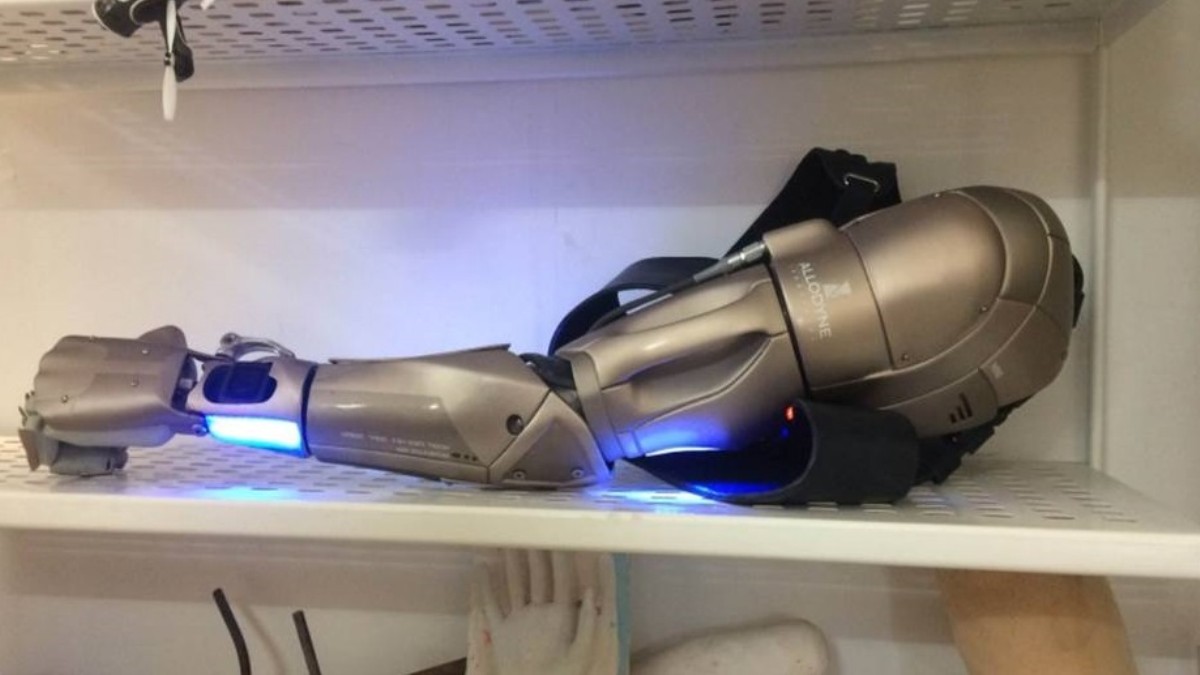
Last weekend, at Body Hacking Con 2016 in Austin, Texas, an astounding prosthetic limb was revealed.

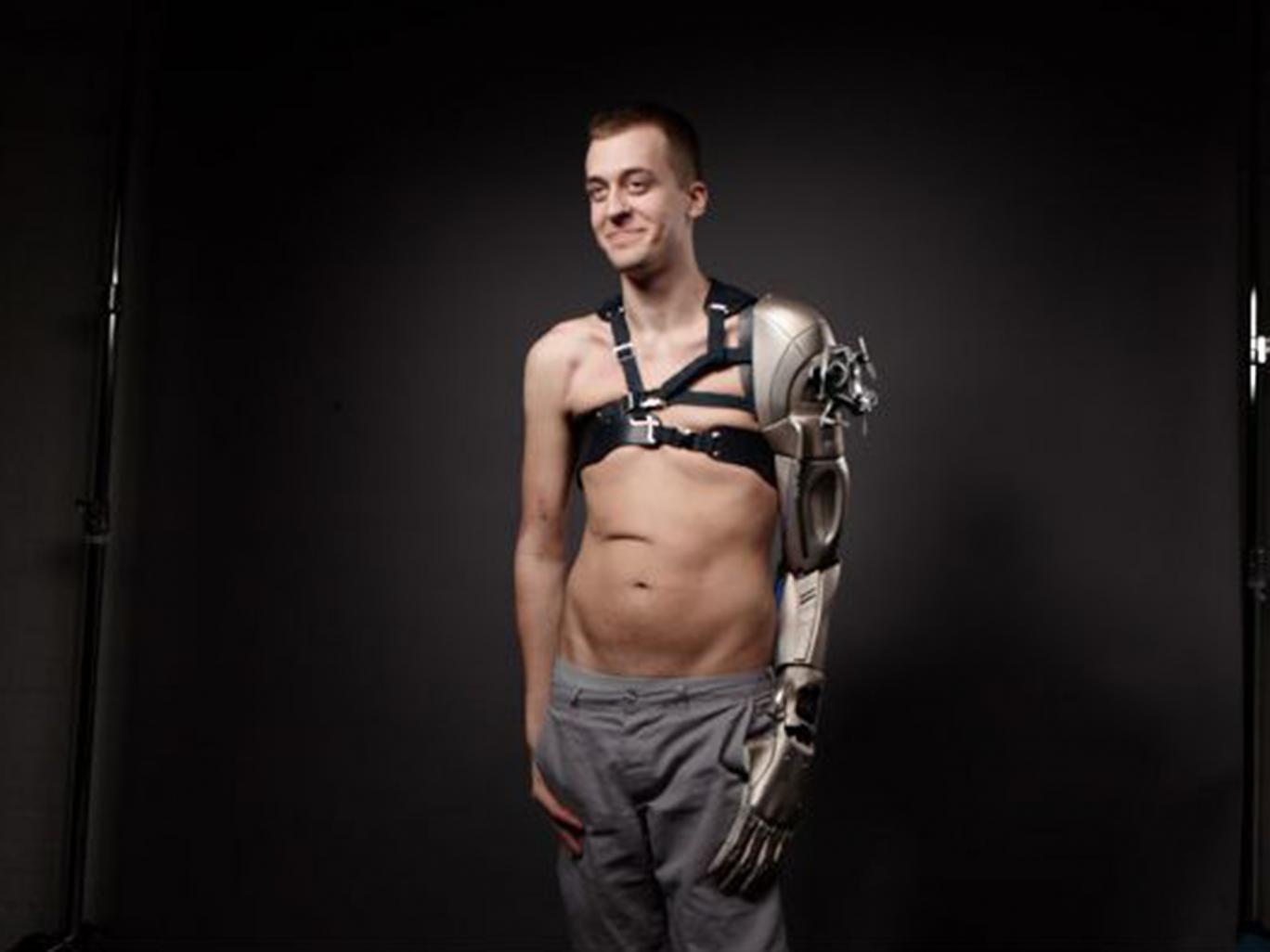
The prosthetic is for James Young, a British double amputee, who was selected to participate in the art-technology-robotics-design project being led by Sophie De Oliveira Barata, who designs and creates the most amazing artificial limbs for people through her Alternative Limb Project.

The things De Oliveira Barata and her collaborators have created are absolutely stunning and include a crystal leg for dancer and singer Viktoria Modesta, that was worn at the closing ceremony of the 2012 Paralympics in London, to legs equipped with speakers or lights, to an arm with a simulated snake coming out of it.

What De Oliveira Barata has created for Young is something equally stunning.

Young’s prosthetic arm looks like something from the future. It has a USB port that can charge a mobile phone and a small screen that displays notifications. The arm has a flashlight which can become a laser.

It’s all themed around the character of Snake and the video game Metal Gear Solid V: The Phantom Pain, in which he wakes from a coma to find that he’s equipped with a cybernetic arm.

The Phantom Limb Project documented the process, and includes information about all the different people involved in realizing Young’s bionic arm.

Published
Comments None
Categories |

Shane Foxman, aka “My Man,” was in the chair on Drex Live last night.

He got me talking about how Apple is coming to the defense of us all with its refusal to bow to FBI demands to break into an iPhone.

We also reminisced about toys of old, including Etch a Sketch, Meccano, and Lite-Brite.

Other topics: the departure of Picasa, how we’re all going to get a chance to be space archaeologists, just like Sarah Parcak, and why the gravitational waves everyone was talking last week are so important.

← Older Newer →