No, Apple is not getting into the car manufacturing business, and on Wednesday I explained to Drex just why it’s a ridiculous idea. We also talked about the increasing evidence of Elon Musk’s genius, and about the 100 people who want to settle Mars.
Last week, the Wall Street Journal reported that Apple is working on an electric car. It’s a minivan. Called “Project Titan”.
This is ridiculous.
I don’t doubt that Apple is working on vehicles, but it would be in the design of user interfaces, or pieces of integration. Apple is not getting into the auto business.
Tesla batteries could power more than cars
Elon Musk, CEO of Tesla, let it slip in an earnings call last week that the company is getting ready to roll out a consumer battery for the home based on the packs used in the Tesla electric cars.
It’s worth noting that Musk is also the chair of SolarCity, which installs photovoltaic panels on people’s houses for free, and people pay for the power the panels produce, which in California is far cheaper than what people are paying their utility.
And if those people can have a battery in the house that will store excess solar power for use during the night or on cloudy days, that just makes the entire solar solution more viable.
So the Gigafactory that Musk is building in Nevada will be producing battery packs for more than just cars.
The initiative to colonize Mars comes from Mars One, a not-for-profit created in 2013 to do exactly that.
An initial roster of 202,586 candidates has been narrowed to 100 people who must commit to leaving Earth and never coming back.
The list includes people from around the world, including four Canadians.
Initial missions will be unmanned, and will be to establish communications and supplies. The plan is to send new groups of settlers every two years.
As for the first 100, they move on to further “selection rounds” that will include training and working within teams. Sounds like Survivor in space, to me.
When Drex and I talked last Wednesday we started off unraveling the privacy concerns around Samsung’s “smart” televisions, some of which are equipped with voice activation and — surprise, surprise — are “listening” to people in their living rooms.
We also talked about machine translation coming to a communication device near you, and what makes the new Sonos logo so cool.
This week, a look at Sonos’ new logo, what’s really going on with Samsung’s voice-activated TVs, and Skype and Google introduce revolutionary new language translators.
Sonos shows off slick new pulsing logo
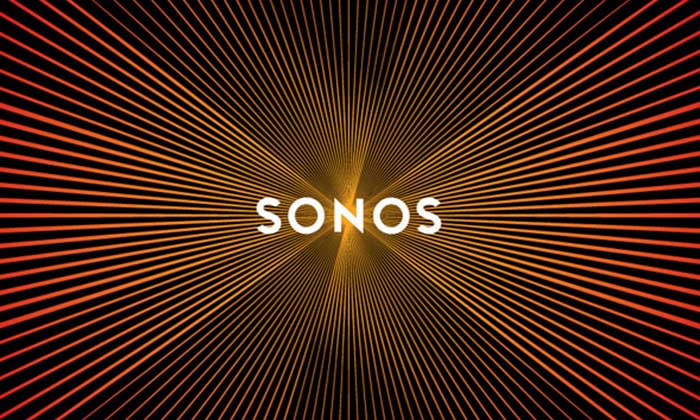
Sonos makes wireless speakers, and they recently unveiled a new logo, designed by Bruce Mau, that not only perfectly conveys what the company does, but is made for the digital age. Here it is:
When you scroll a web page, the logo appears to pulse in the same way sound waves pulse out from a central point. It’s an optical illusion created by the moiré pattern in the lines.
I’ve got a Sonos Play:5 in my kitchen that links up to my home wireless network, and I love it. There are a range of speaker sizes, including a sound bar and a subwoofer, and you can pair the speakers to create stereo and surround sound.
They all connect to your home media player and to the usual radio and music providers, including SiriusXM, Soundcloud, Spotify, and others.
Be careful what you say to your Samsung television
This week, some careful reading of a Samsung privacy statement revealed that the company’s smart televisions might be transmitting private conversations. One Twitter user realized that a section of the policy was eerily close to a section from George Orwell’s 1984.
The voice-activated screens work by having a separate company listen for key words that are used to operate the display and turn them into text. It’s not all as bad as it sounds, and today Samsung clarified its privacy policy.
The TVs won’t actually transmit conversations, it turns out. And users can always disable the voice activation feature. Of course, then you can’t talk to your TV.
Skype bringing translation to video communication
Since acquiring Skype, Microsoft has been pushing the communications service, and is rolling out a real-time translation feature.
The first dimension of Skype Translator allows for English-to-Spanish (and vice versa) voice translation, on the fly, and for more than 40 languages in the messaging part of the program.
This video shows a group of students trying the translation feature.
Microsoft says that Skype Translator operates on machine learning so that the more it gets used, the better the translations become.
Using your phone to translate
Google has rolled out a couple of new features for its Translate app, which is available for both Android and iOS.
With Word Lens you can point your mobile’s camera at a sign and have the text be instantly translated from English to and from French, German, Italian, Portuguese, Russian, and Spanish.
And updates to the Translate app mean that you can use it to assist in real-time conversations. The system automatically recognizes the languages being spoken and then provides audio translations for both conversants. The video below shows how it works.
No audio on SoundCloud from last night’s broadcast, but Drex, back in his chair after a bunch of days off sick, and I talked about how much time employees waste surfing the Internet when they’re supposed to be working, and how Stop Procrastinating can help. We also talked about the things that the millionaires at Andreessen Horowitz are thinking about, and presumably investing in.
The Mind Control Division is the intelligence arm of Blaine Kyllo's Solo Corps Creative Incorporated. This department conducts investigations and experiments into media and technology culture.