This week, we wonder if Etch a Sketch is going to become a digital device, Google is shutting down its Picasa photo site, a modern-day Indiana Jones shares her wish at the Ted conference, and why everyone is talking about gravitational waves.
Etch A Sketch bought by Toronto toy manufacturer
Spin Master, which makes electronic toys like the remote-control vehicles, Zoomer pets, and Star Wars robots, has added Etch a Sketch to its roster.
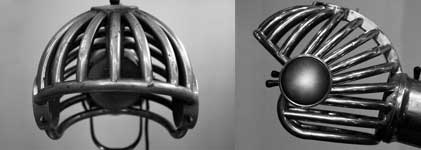
If you’re not old enough to remember, the way the drawing tablet works is that the screen is coated with aluminum powder. Moving the knobs moves a stylus on the inside of the screen, which scratches off the powder, revealing the dark interior of the box.
Turning the Etch a Sketch upside down and shaking it recoats the screen with powder, effectively erasing the picture that had been drawn there.
Exactly what Spin Master plans to do with the Etch a Sketch is unknown, but the company acquired the Meccano brand in 2013, and has modernized the model system with more robotic and motorized components.
Given how digital tablets have become part of our world, perhaps Spin Master has a plan to transform the Etch a Sketch into something more like an iPad.
Ohio Art, which had been manufacturing Etch a Sketch since the late 1950s, did make some attempts to digitize the toy in the ’80s and ’90s, including the Animator 2000, which had an LCD screen and 196 kb of memory.
Google shutting down Picasa photo site
Google acquired Picasa, the online photo sharing service, in 2004, as a way of quickly building out its online service offerings. Google quickly made Picasa free. The service became one of many ways Google got users into its ecosystem.
Which is one reason that Yahoo acquired Flickr a year later.
12 years later, Google has announced its plan to discontinue Picasa, encouraging users to move to Google Photos, where you can store an unlimited number of photos and videos,
Ted Conference going on now
TED2016 is underway, and last night, archaeologist Sarah Parcak, winner of the 2016 TED Prize, revealed her wish for the $1 million prize.
Here’s what she said: “I wish for us to discover the millions of unknown archaeological sites across the globe. By creating a 21st century army of global explorers, we’ll find and protect the world’s hidden heritage, which contains humankind’s collective resilience and creativity.”
Parcak is using the money to build a citizen science platform that she calls Global Xplorer. It will enable all of us to do what she does: search for archaeological sites using the power of satellite imaging.
“We will find the millions of places occupied by the billions of people who came before us,” she says. “A hundred years ago archaeology was for the rich, 50 years ago it was mainly for men, now it is primarily for academics. Our goal is to democratize the process of archeological discovery and allow anyone to participate.”
You can watch the remaining TED sessions at many of the libraries in the Lower Mainland, including the Vancouver Public Library and at some high schools and universities. Vancity Buzz has the full list.
Einstein predicted gravitational waves, now they’ve been observed
The collision of two black holes — spinning around each other at half the speed of light at the last moment before they became one, larger black hole — provided the gravitational waves that have helped prove another aspect of Einstein’s general theory of relativity.
The findings were published in Physical Review Letters last week and have had everyone talking, but exactly why we should be excited about this is not simple to explain.
The collision of the black holes resulted in a release of massive amounts of energy, reportedly 50 times more than all the stars in the universe combined. But none of that energy was emitted as light, or electromagnetic radiation. It was released as gravitational waves.
And without the Laser Interferometer Gravitational-Wave Observatory observatories (LIGO), with facilities in Louisiana and Washington State, we never would have detected those waves, which traveled 1.3 billion light years to reach Earth, arriving last September.
This all hinges on how we understand gravity. It is not, as Newton thought, a force caused by the attraction of two objects.
Einstein thought of gravity as being the reaction of objects to being in spacetime, which is how we talk about the concepts of space and time being part of the same thing. The reason that massive objects appear to have more gravity is because their mass bends spacetime, causing other objects to “fall” towards them.
And normally, spacetime is flat. Like a blanket suspended in the air. There are curves and indentations where objects with mass are on/in spacetime, but the space between objects is mostly flat. When objects move through spacetime, they cause vibrations in the fabric. These are gravitational waves, which normally are so incredibly small as to be undetectable.
When catastrophic events occur in spacetime, though, the blanket ripples more blatantly. Like the collision of two black holes.
Kip Thorne, who was an advisor on to Christopher Nolan on Interstellar, is a co-founder of LIGO. At the press conference last week he said, “We’ve only seen warped space time when it’s very calm. We’ve never seen the ocean roiled in a storm with crashing waves. All of that changed on Sept. 14 2015.”
Even so, the effect of the astronomical event is difficult to detect. The “jiggle” experienced by the Earth as a result of the gravitational waves was 1/1000th the diameter of a proton (for comparison, I’ve heard it explained that the gravitational waves that are caused by the Earth moving around the sun are many millions of times smaller than that). It was detectable because LIGO has just completed an upgrade to its sensitivity. It will continue to be upgraded so that even more data can be collected.
What it all means is that we know more about our universe today than we did last week. And now we know what else we can “look” for. All that dark stuff out there.

Comments
Commenting is closed for this article.